TAD
  • HOME
  • EXPERIENCE
    GlobalFoundries Tesla - Manufacturing Tesla - Software
  • PROJECTS
    Baja SAE IQT Labs
  • ACADEMICS
  • CONTACT

BAJA SAE

Blue Jay Racing is the Baja Team at Johns Hopkins University, founded in 2004. Every year, the team builds an offroad race vehicle, designed to tackle truly brutal terrain. I credit this experience as the largest source of practical knowledge-gain during my education. On the team, I started as a drivetrain structures design engineer but quickly became suspension lead and later team captain.

  • Team Leadership
  • SOLIDWORKS
  • Lotus Shark / ADAMS
  • ANSYS FEM
  • Design for Manufacture
  • Machining / Welding

Team Captain

2023-2024

As the team captain of a group with much existing engineering talent, my primary responsibilities were:

  • high level vehicle dynamics and architecture for the 20XT
  • welded component assembly
  • driver training
  • managing team leads and ensuring constructive teamwork
  • finances, documentation, and fundraising
  • recruiting

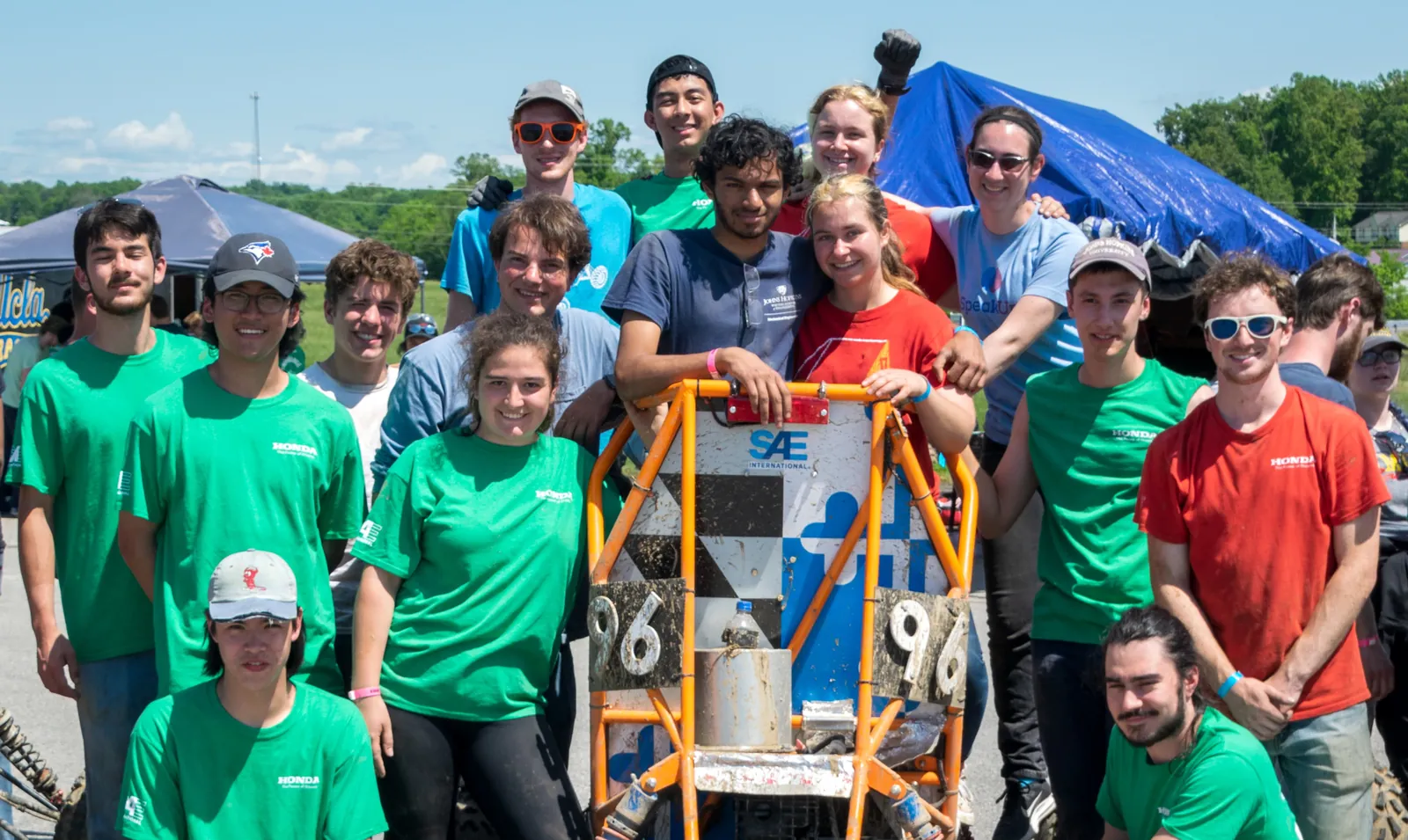
With a combination of organization, driver training, vehicle dynamics, and a team of amazing engineers, we broke a 20-year team record, placing 6th of 61 teams in California 2024. That was then re-broken with a 5th place overall in Williamsport 2024 out of 107 teams.
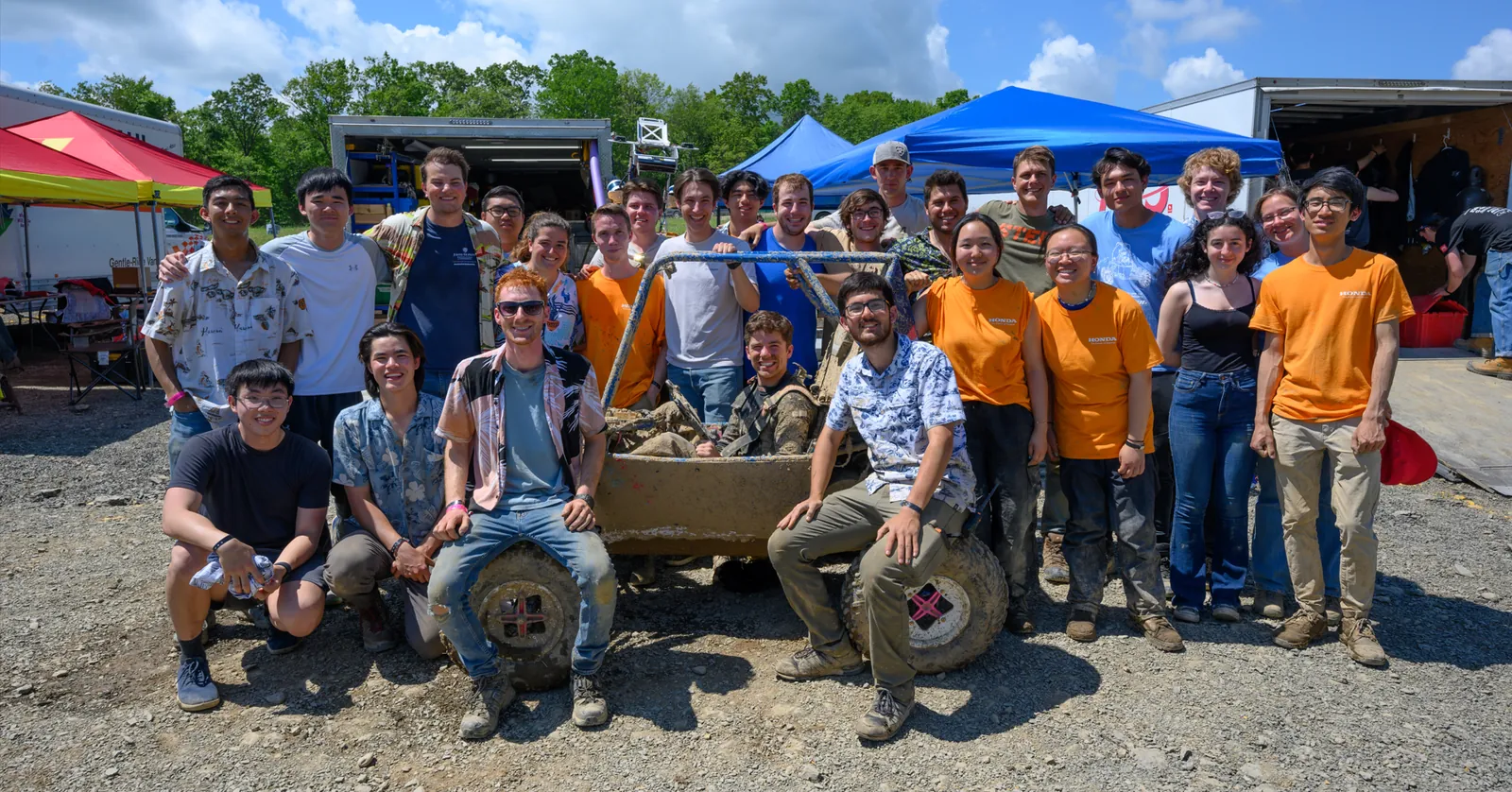
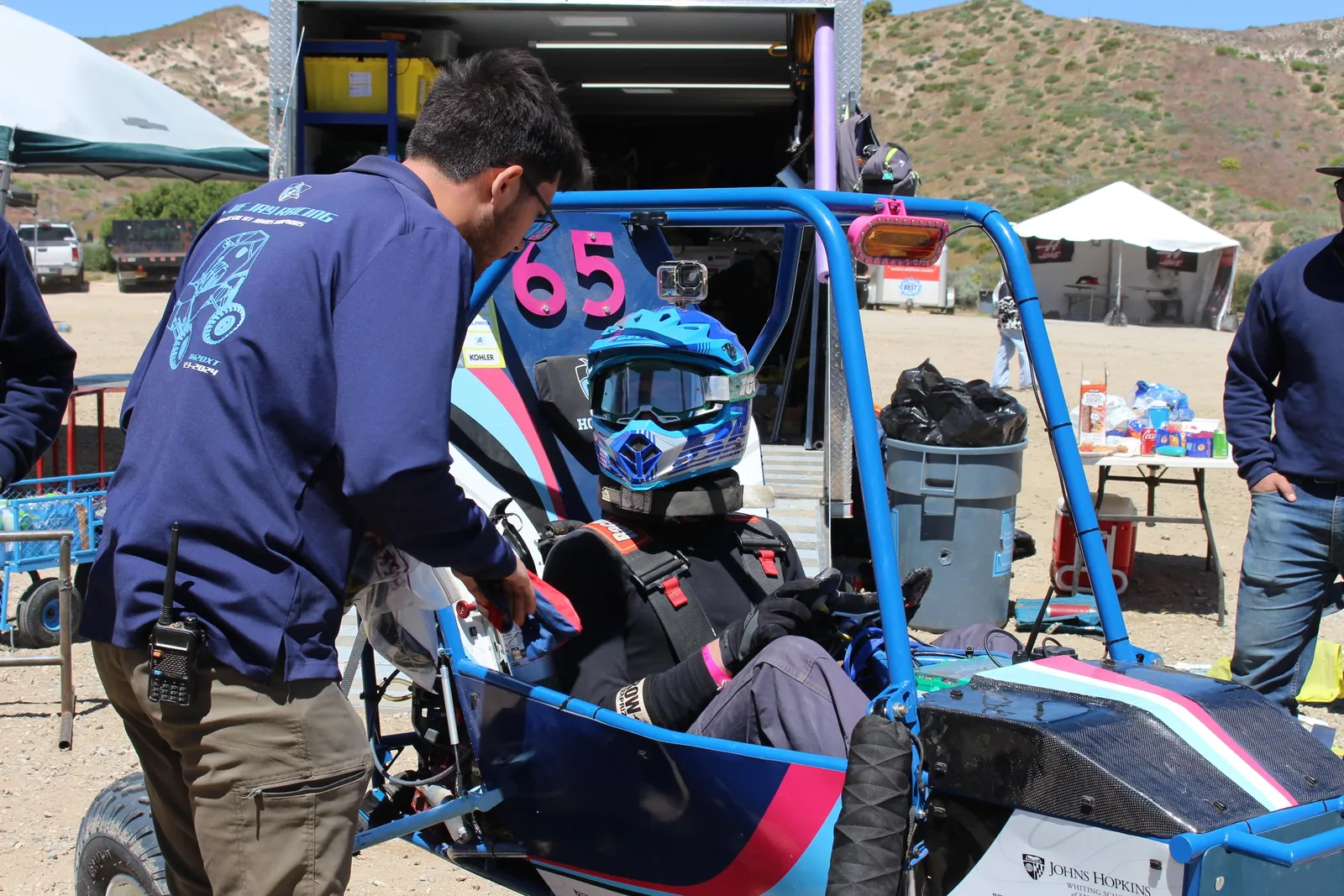
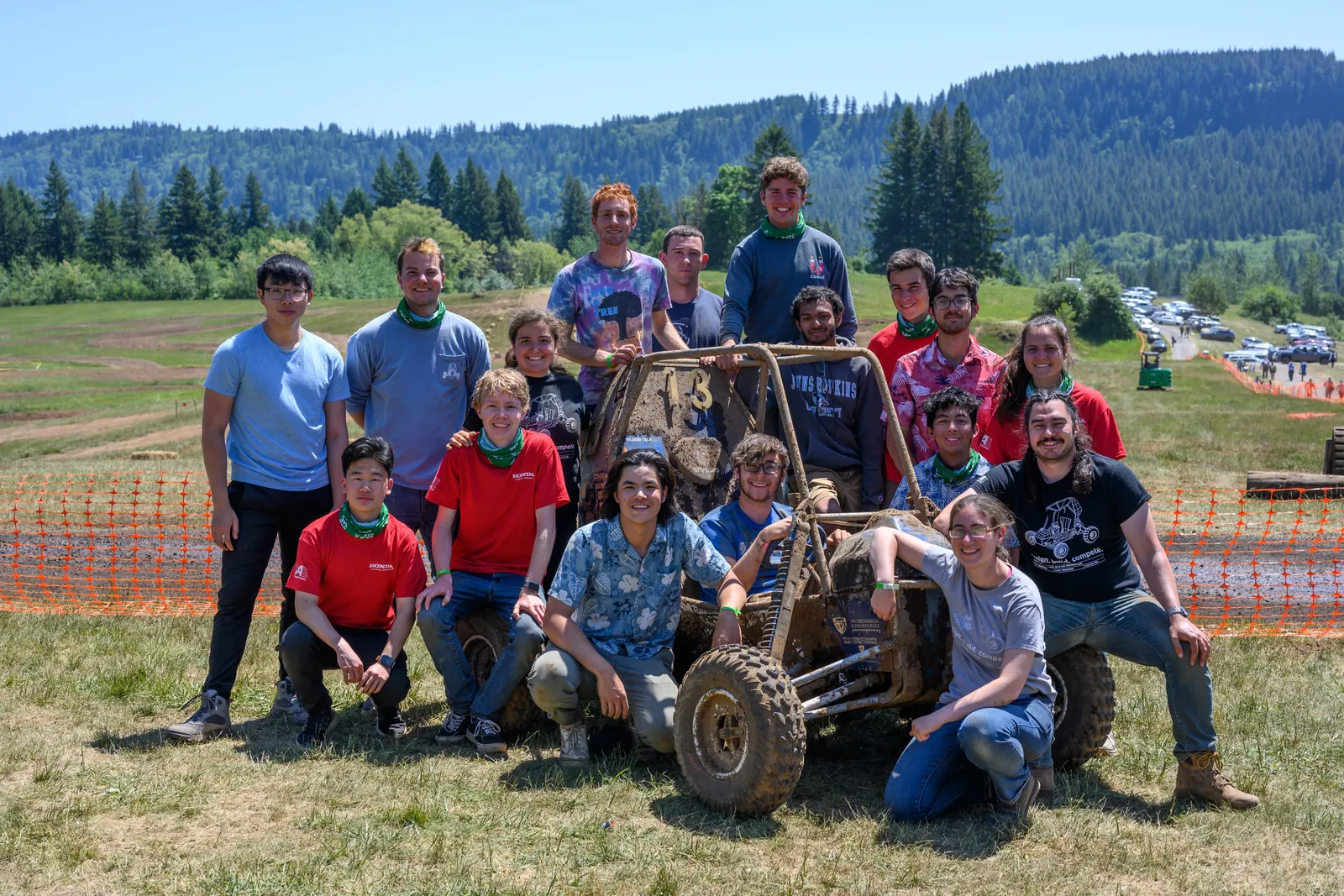
Blue Jay Racing team photo, Pennsylvania 2024

Vehicle Dynamics

The first major architectural change I made was to shrink everything to reduce mass. Overall wheelbase and track width were decreased to improve maneuverability and reduce unsprung mass. I shrunk bounding boxes for the front foot box and differential to the minimal allowable to help maximize utilization of driveshaft joint misalignment. Then, I pushed the ride height and steering angles to the maximum allowable with existing hardware and routed the tie-rod above the linkages to allow clearances at such extremes. I stabilized the roll centers through travel and decreased pro-dive characteristics to create more predictable cornering dynamics.

The team's chief engineer found an opportunity for extreme weight savings by switching from a rear semi-trailing arm to a loaded half-shaft design. This was new to the team, and I had to design this rear suspension geometry from scratch. I also implemented a passive, geometric rear-steer mechanism for the car. Learning from the 19XT, I transitioned to a more damped (with adjustable compression damping), less stiff shock setup, which led to better energy dissipation and ride characteristics.

The Williamsport dynamic day point total broke the 19XT's record and every Hopkins vehicle since 2015.

Frame and Suspension Welding

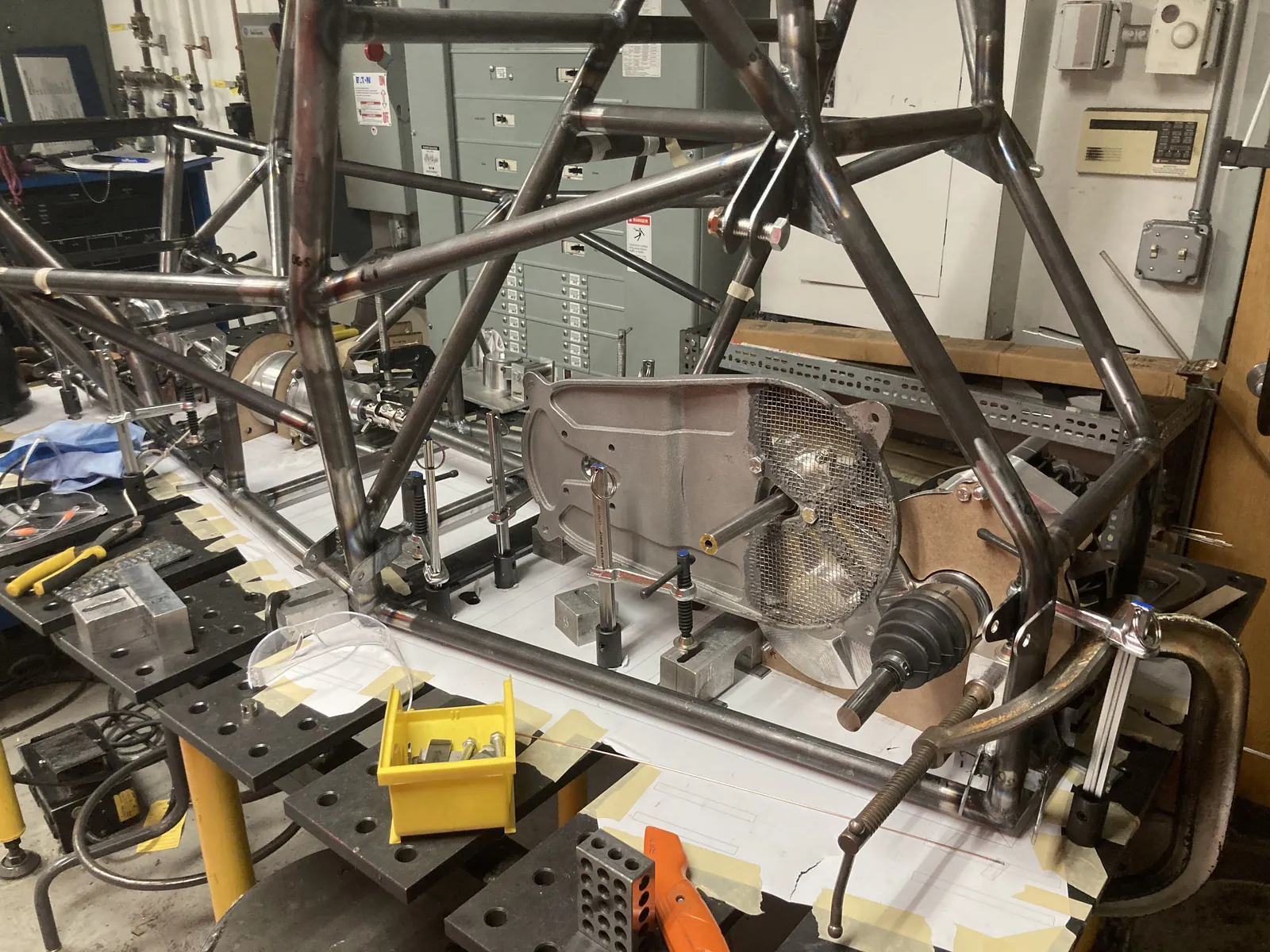
With our frame designer, I thoroughly reviewed all the frame designs and drawings, and resolved all discrepancies, allowing the team to experience no issues in any competition frame inspection. I also designed all of the frame jigging and assembly procedures, allowing us to finish welding the tubular frame members less than 6 days into intersession, an (unverified) team record. Between jigging sessions, our primary welder worked on the frame and I welded 15 of 18 suspension linkages, as designed by the 20XT suspension lead.

Driver Training

After my disastrous driving performance in Rochester 2022 with no training (later redeemed by an unbeaten 28 consecutive lap run in Arizona 2022), I placed a huge amount of emphasis on driver training as Captain. I organized many trips to UMBC and AOAA for training, where I coached two primary drivers on difficult, technical courses that paid out heavy returns on dynamic and endurance days.

Baja car during driver training

Team Organization

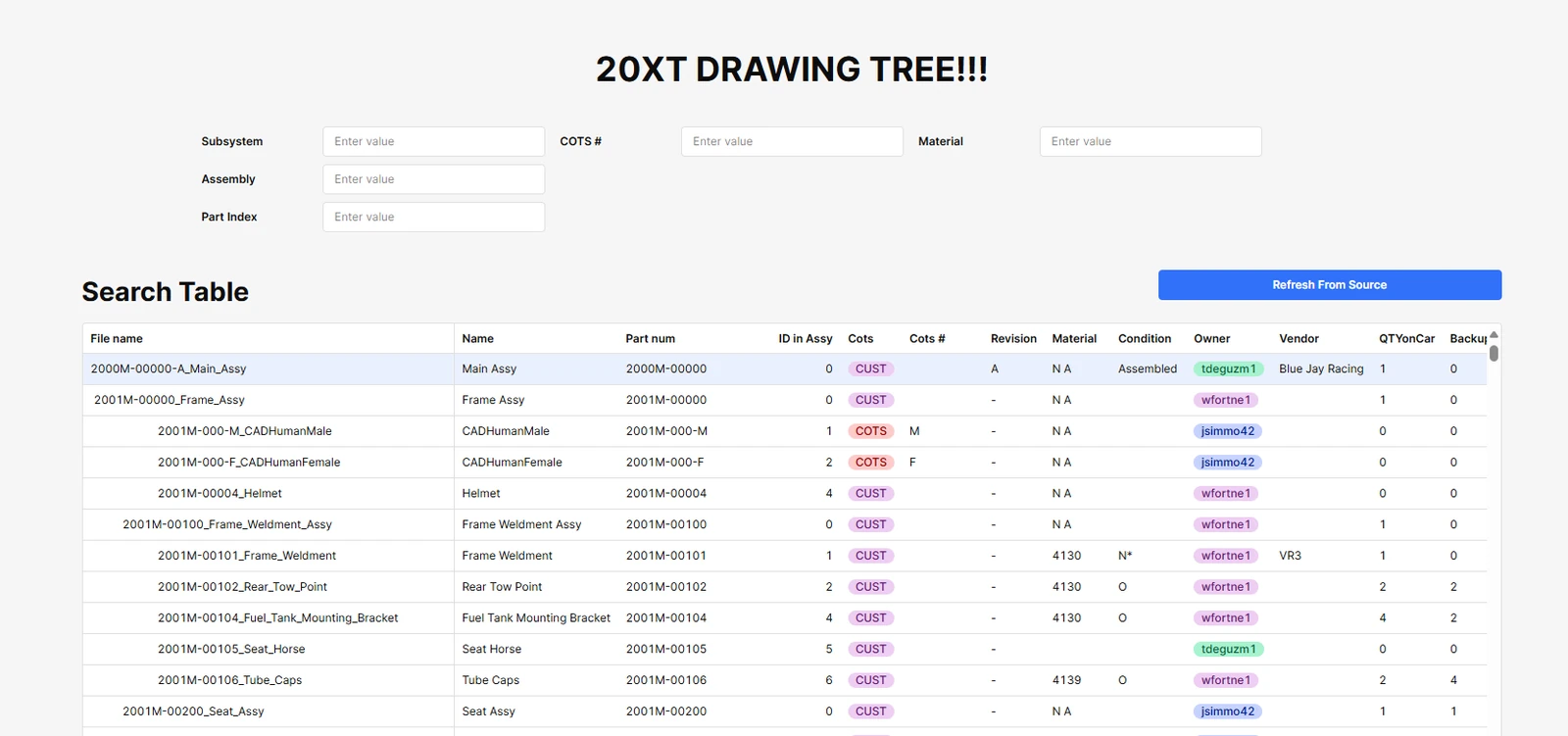
In addition to running full team meetings, team lead meetings, setting the yearly calendar, and delegating deliverables, I also built several organization tools for the team to use. This included building a custom drawing tree website and database backend that tracked every one of the 1200 components on the car through the design and manufacturing cycle.

You can see the website linked below, using a combination of SQL, JavaScript, and a drag-and-drop graphics generator.

Custom drawing tree website screenshot

CLICK FOR LIVE VIEW

Finances and Documentation

With a restructuring of budgeting and administrators in the MechE department, our budget became much more strictly enforced. In addition to controlling spending, I led fundraising efforts, bringing in more than $60k above our base budget from the school. This marked the team's first year with both an end-of-year budget surplus and a top-ten car.

In addition to the financial responsibilities to the team and school, I also was primarily responsible for cost reporting to SAE. I also was accountable for all safety, roll cage, and technical documentation, which I am happy to say had no errors or issues.

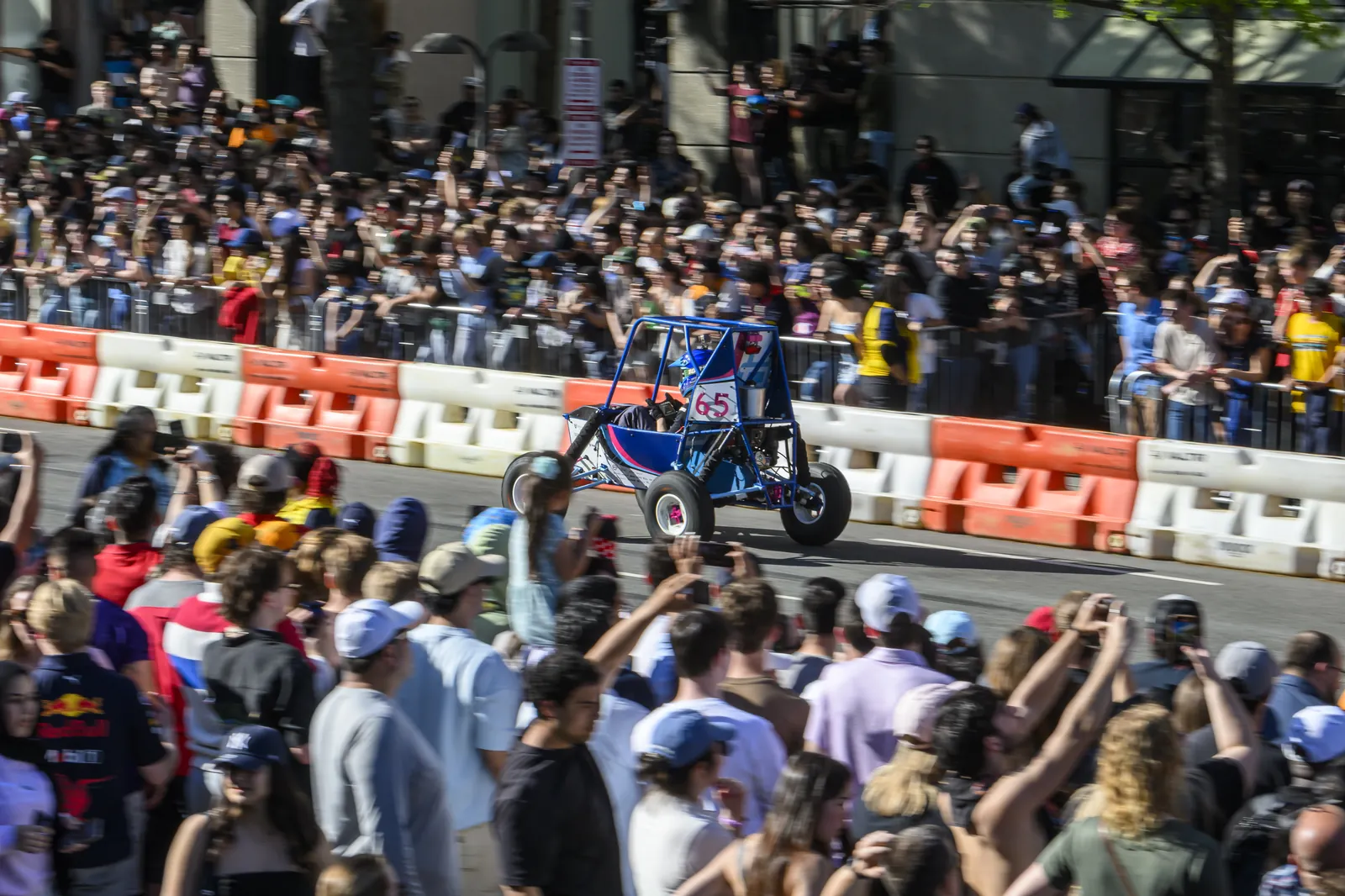
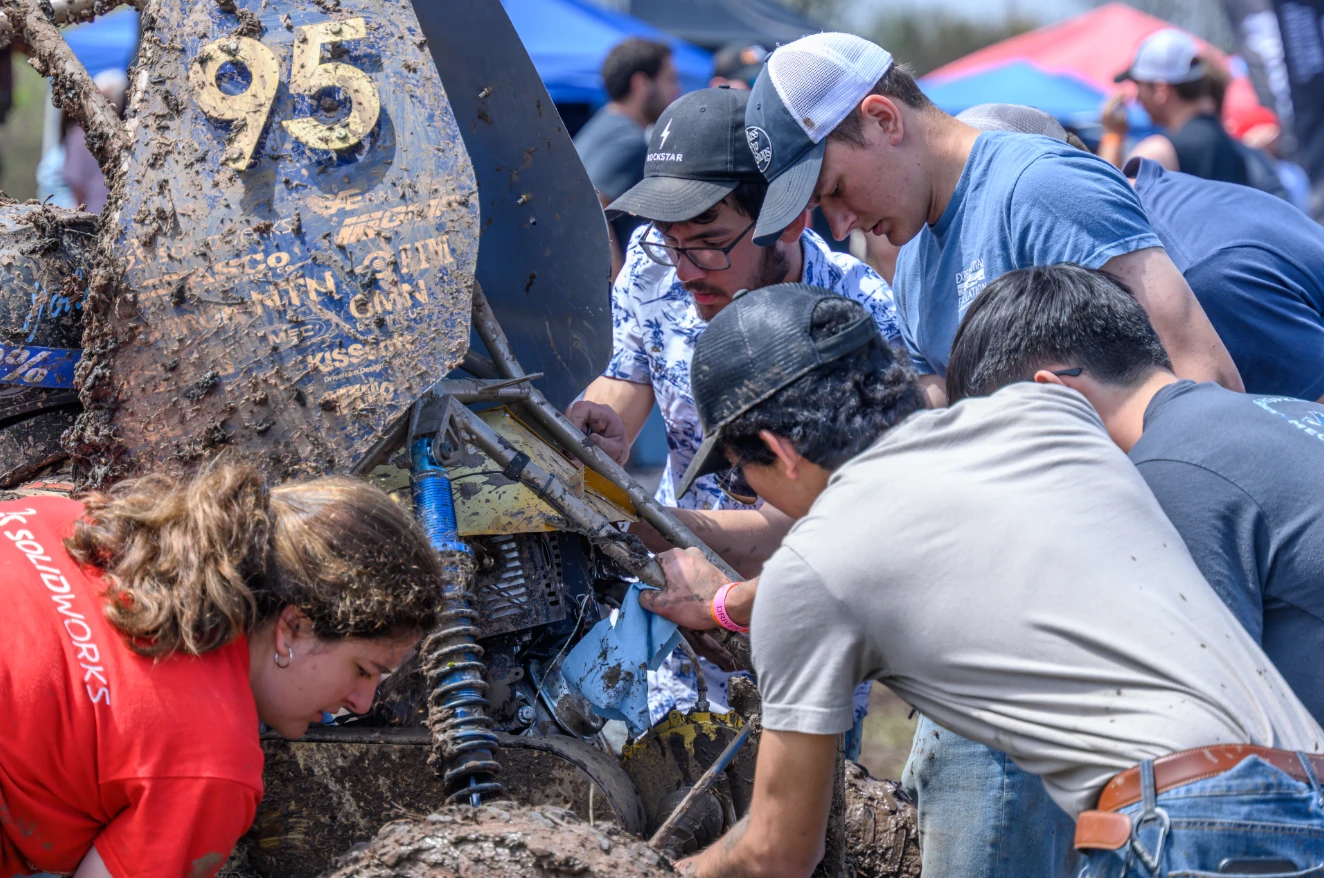
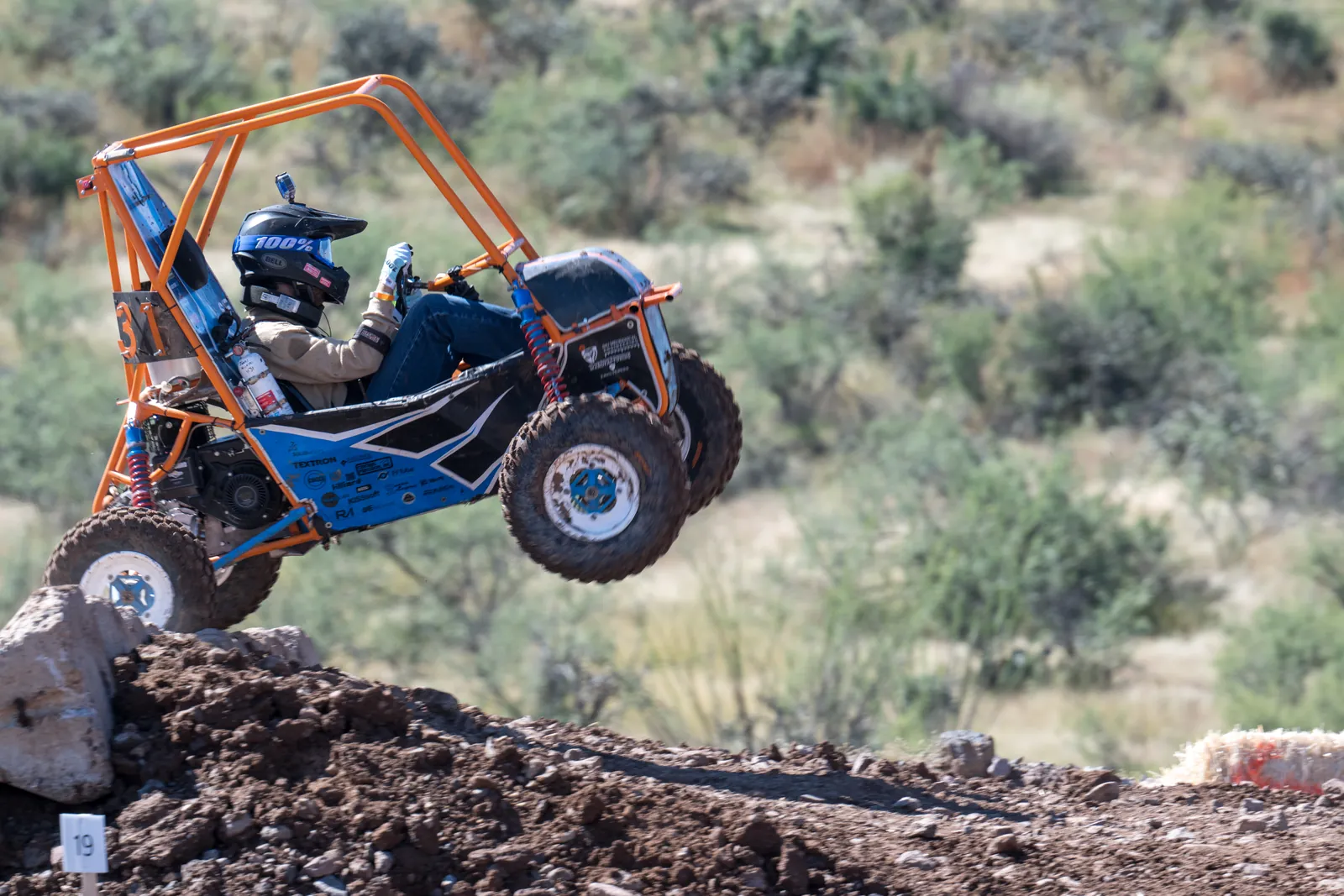
Baja car at competition

Recruitment

Finally, I helped grow the team to a group of about 40 active members over the year, up from 25 in 2023. The team became a lot more involved and diverse — both in demographic and engineering interests. This was driven by outreach programs, new member engagement opportunities, and supporting the creation of the DAQ (data acquisition) subteam, led by Aaren Wong. This effort expanded team involvement in the fields of electrical engineering and computer science. While I can only take credit for allocating a small budget and providing technical support for kinematics calculations, this new group of team members will be the competitive edge that I hope Hopkins Baja will carry long into the future.

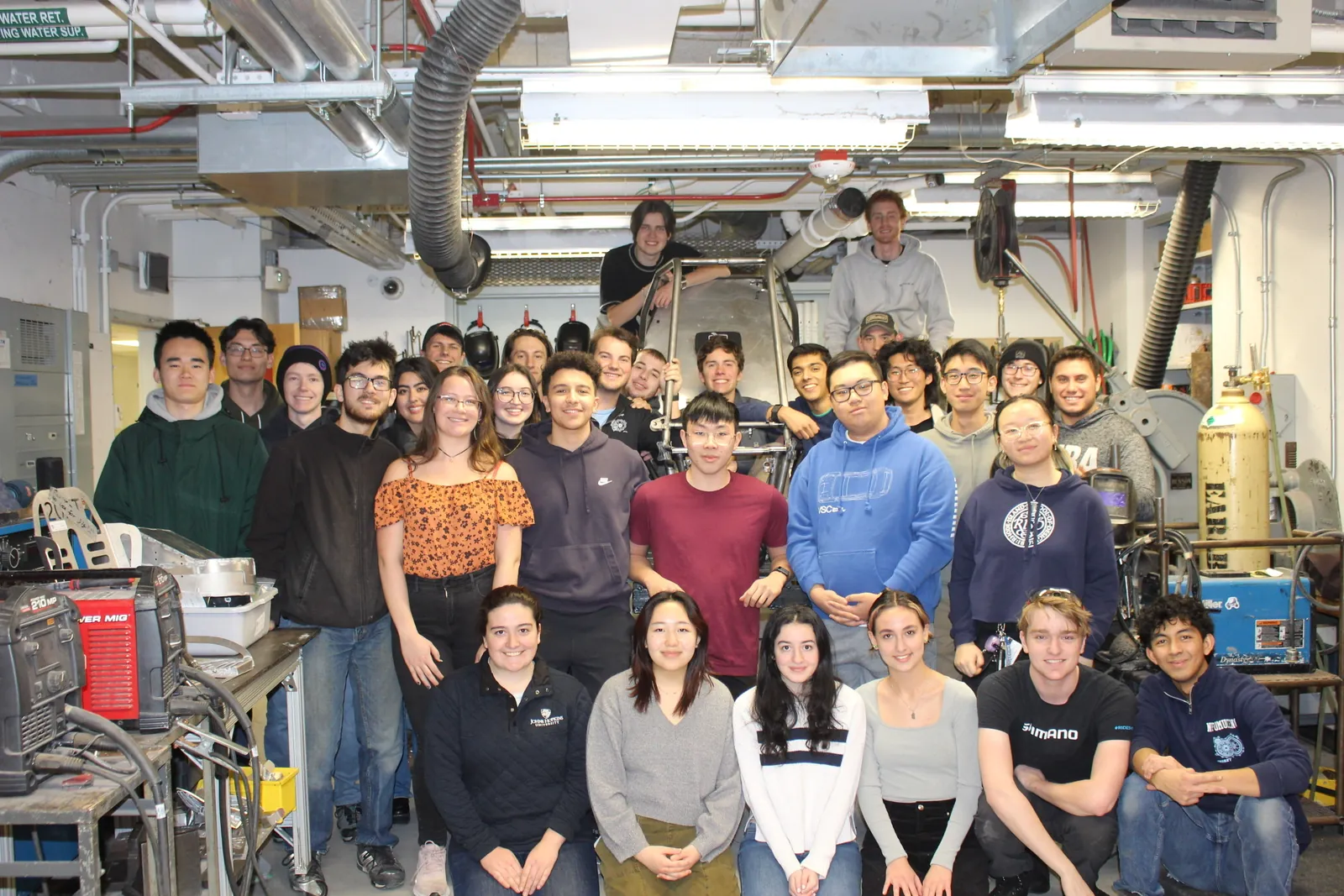
Blue Jay Racing team members

Suspension Lead

2022-2023

As suspension lead, I was responsible for 5 engineers on my subteam and its overall design and manufacturing:

  • Design and clearance validation
  • Component load determination
  • Component structural analysis
  • Jigging, welding, and machining suspension parts
  • Shock selection

From a combination of diligence and thorough design, the 19XT suspension never saw a custom component failure despite a 10% weight reduction and achieved the best dynamic day placement in team history, 4th place in Ohio 2023.

The 19XT Baja car

Component Load Determination

After data collection from wheel force transducer measurements, the team did not have a good way of propagating those forces and moments to the rest of the vehicle. I developed a 6-DOF linear algebra algorithm to calculate the forces and moments on every joint, based on the instantaneous geometry at a given point in travel. Using a fixed-shock assumption, this became a well-determined problem with a conservative output, that can be adjusted for more compliant assumptions.

Component load determination algorithm output

ANSYS Finite Element Analysis

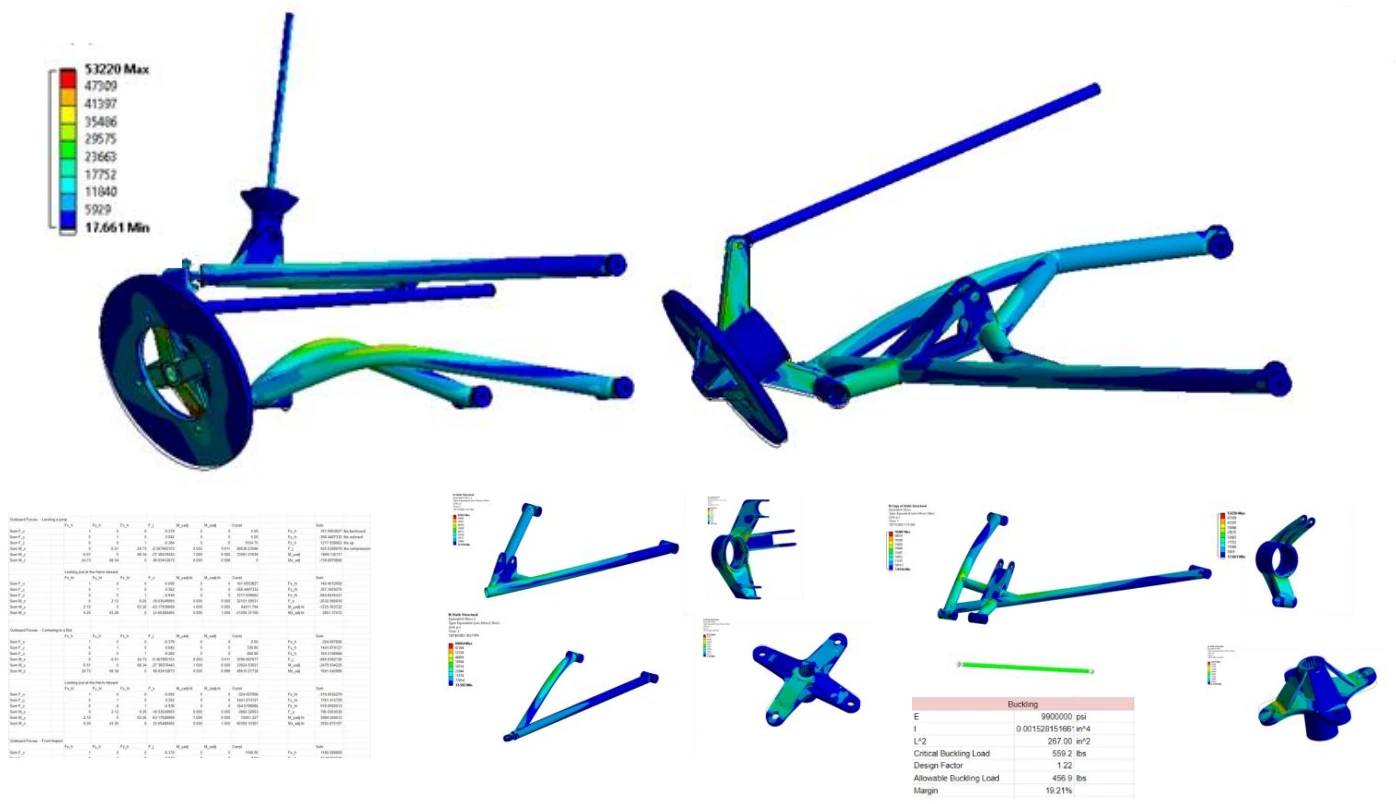
By the time I was team captain, other team members had worked for SpaceX structures or taken Hopkins' applied FEA class, but back when I was suspension lead, I was the most experienced at ANSYS (other than the team captain). This made it my responsibility to verify all of the team's finite element analysis and teach all the other members how to do it. This included parts from my suspension team, as well as helping set up everything from drivetrain components to steering and brake items.

ANSYS FEA result for 19XT suspension

Manufacturing and CNC Parts

I was also responsible for manufacturing the suspension subsystem, which included designing jigging for all of the weldments.

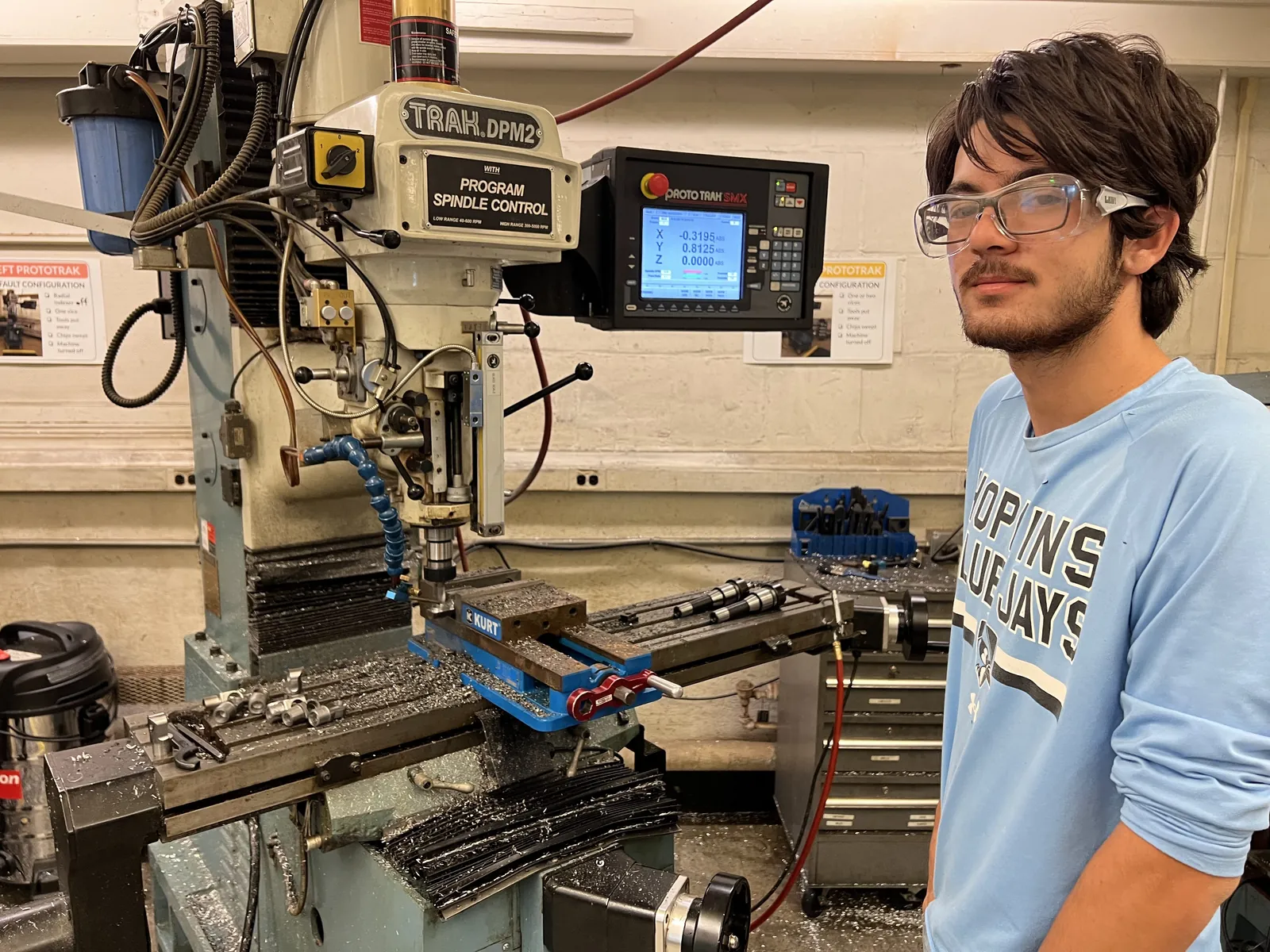
I also designed a new type of CNC-machined spherical bearing housing. To complete the first set of these, with the help of some friends of the team, I used the ProtoTRAK at MIT. This was the first CNC part the team ever made on a ProtoTRAK. This was important because we got our own CNC ProtoTRAK in the Hopkins student shop the following spring and these were the first CNC parts made on that machine and in that shop.

CNC machined suspension parts

Drivetrain Structures

2021-2022

As a drivetrain engineer, I was responsible for several components:

  • CVT backplate
  • Torque limiter and shifter case
  • Gaged CVT tuning
Drivetrain of the Baja car

CVT Backplate

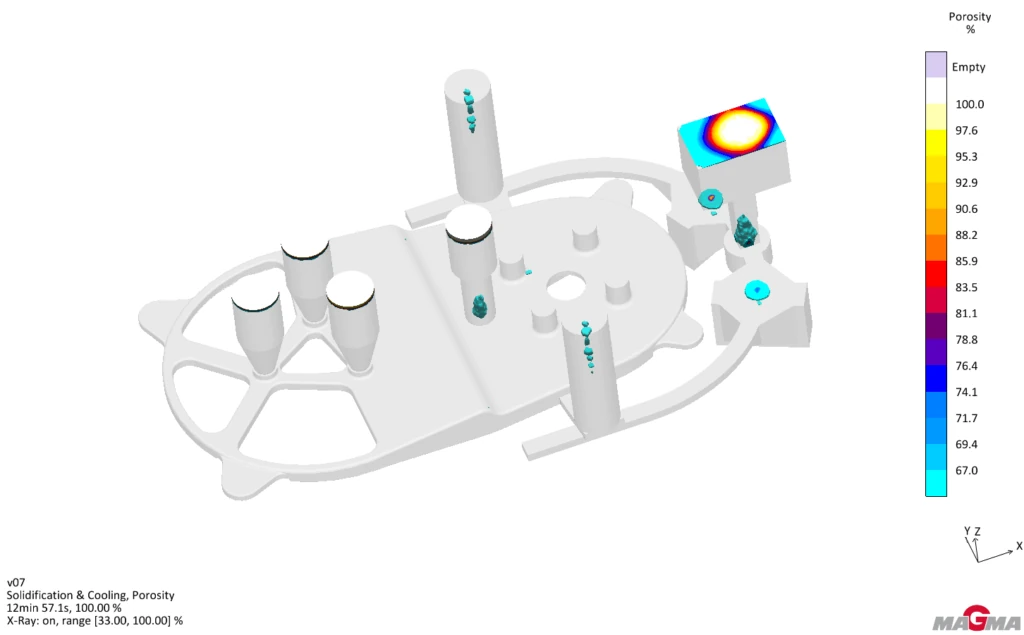
The first part I ever designed was the CVT backplate. This was a casted component that rigidly fixed the engine to the gearbox to resist CVT belt tension. I dove into this assignment, learning topology optimization to lightweight it and collaborating with our casting sponsor to eliminate any unwanted thermal effects while pouring. I even have an X-ray of the part showing no porosity as part of non-destructive testing. The team captain and I also set up the team's first assembly-level ANSYS simulation. Interestingly, we also discovered that we did not need this (still heavy) backplate if we reinforced the gearbox and engine mounting, deleting the part in future years.

Casting porosity X-ray analysis

Shifter/Torque Limiter Case

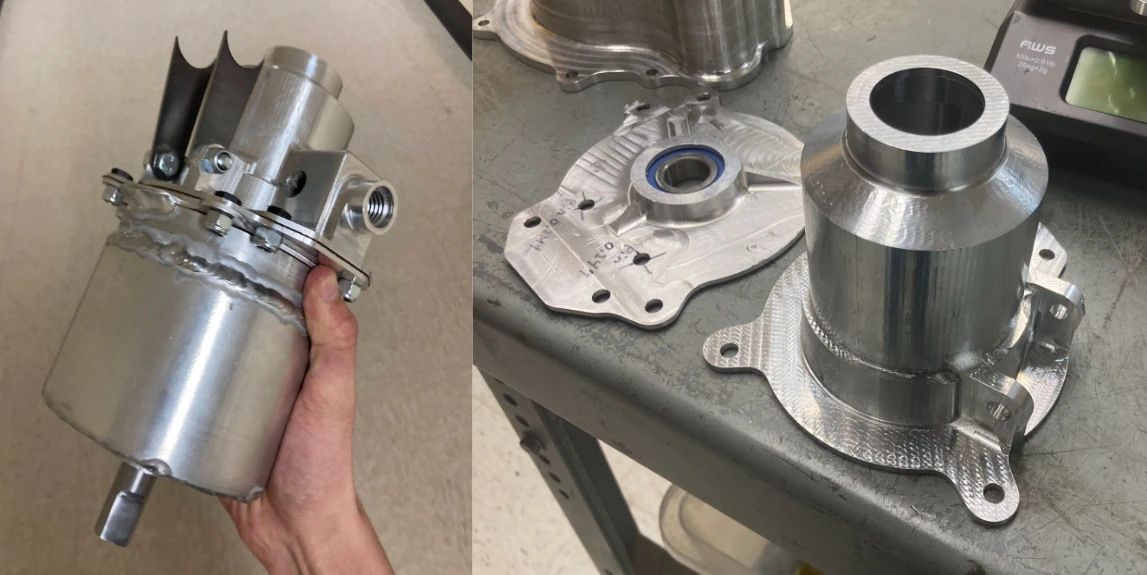
With the CVT backplate success, I was also assigned to design the shifter and torque limiter case. To do this cheaply and quickly, I split it up into multiple parts: a CNC oil volume for the dog clutches and shifter, and an aluminum welded tube sheathing for the torque limiter. This was a great experience because it introduced me to most of the manufacturing techniques used by the team.

Shifter and torque limiter case CAD

CVT Tuning

Towards the end of the year, the individual responsible for CVT tuning left the team, and that responsibility was delegated to me. I learned everything I could about the dynamics of CVT transmissions and learned the Gaged CVT system inside and out. With zero notice about this before the first competition, the CVT was likely in a non-optimal condition. However, between competitions, with countless hours researching and tuning the system on-car, I was able to improve the car's acceleration by 15 places and sled pull performance by 36 places.

CVT tuning on the car
Blue Jay Racing Arizona 2022
TAD

© 2026 Theodore DeGuzman